
 October 7, 2026
 Spencer Hall
 Every compressed air system depends on numerous components working together to deliver reliable performance, but some of the most important are also the easiest to overlook. This blog highlights the critical role valves and seals play in regulating airflow, maintaining pressure, and preventing leaks throughout oil-flooded compressed air systems. Understanding how they work and how to keep them operating properly can help improve efficiency, extend equipment life, and reduce the risk of unexpected downtime.
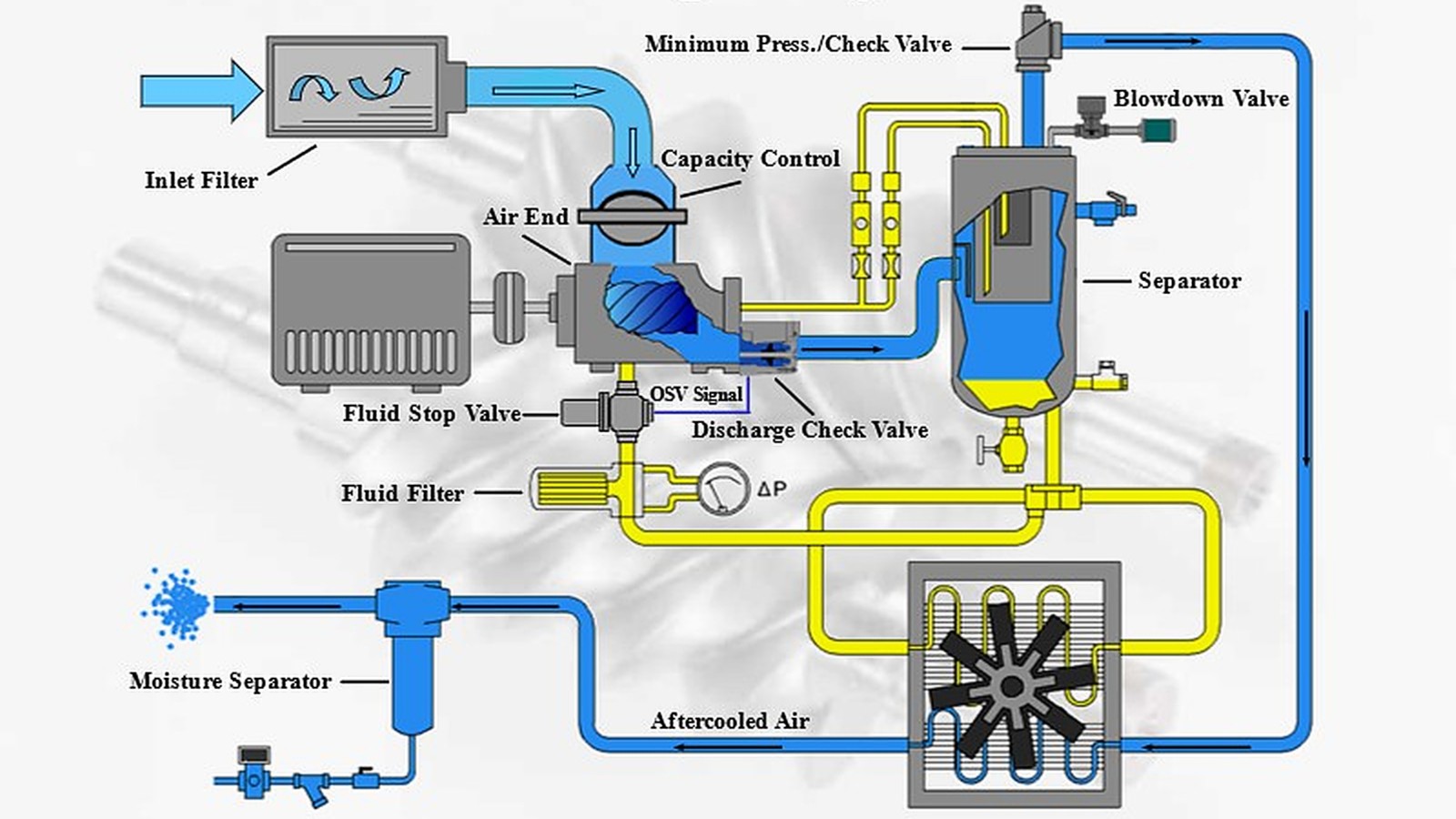
There are many types of valves in compressed are systems: Solenoid valves, blow down valve (BDV), pressure regulators, pressure relief valves, minimum pressure control valves (MPCV), inlet valves, shuttle valves, check valves, thermal valves… just to name a few. Each of these components serves a specific function to ensure the equipment runs as designed and as a safety stop gap for both the equipment and the operators.
One of the most common issues with compressed air systems is proper sizing of the air compressor, air piping and receiver. All the valves listed above are subject to premature failure due to high load/unload cycle counts or running unloaded for an extended amount of time.
In terms of modulations, lack of inlet modulation is a common service call. We find one valve failure can cause other valves to fail, usually seal and diaphragm failures in the control system are the culprit. A pressure regulator out of adjustment or worn diaphragm can cause control components to wear prematurely due to high load/unload cycle count. The results are often expensive repair costs along with efficiency decline.
The MPCV in a compressor system is no doubt one of the most important control valves on your compressor. All of the control valves play an important role, but this one can make or break the operation like no other. Due to its location, the MPCV is exposed to the worst conditions in the control system.
Every cfm that feeds your process passes through this valve. The compressed air in this location of the discharge system is hot and humid. The valves, seals and related components in this area are susceptible to scale and corrosion. Depending on the application, the condition of the MPCV can deteriorate at an alarming rate. A good maintenance routine to service this MPCV will provide years of reliable control.
This valve serves two purposes:
The BDV is probably the second most important valve on the compressor package for system control. With each load cycle there is a chain of events that occurs: when a load signal is initiated, load solenoid changes state, inlet valve opens, BDV closes, MPCV opens, flow and pressure increases. As pressure reaches the unload setpoint, inlet valve modulation has reached its maximum and the reverse occurs: load signal drops off, control solenoid changes state, inlet valve closes, MPCV closes and the BDV dumps all the hot humid air to the atmosphere. Without a properly functioning BDV, there is risk of over loading the drive motor, over pressurizing the plant and lifting the pressure relief valve.
Knowing the difference in available seal materials is crucial when selecting a replacement component. The manufacturer has already completed the homework for you in selecting a component with the proper seal material. Therefore, pay attention when selecting OEM vs non-OEM replacement parts. Cheaper is almost never better.
Buna is a popular seal material in the compressed air industry. One question that comes up regularly: is it Buna or Buna -N? Which is it?
Manufacturers of components sometimes drop the -N when adding descriptions to their component seal material. Buna and Buna-N are often used interchangeably to indicate the material used is a synthetic rubber.
However, there is a name distinction within the Buna family. Buna-S is a thing:
Other common seal materials found in our compressed air industry are EPDM (Ethylene Propylene Diene Monomer) and Viton.
Seals in general have a finite life span in any application. Seals are often referred to as “soft goods” and can be in the form of O-rings, gaskets, lip seal, U-cup, V-ring, mechanical, labyrinth, and carbon ring seals, just to name a few. Typically, seals are used to contain process air, oil or gas to a certain design specification.
Seal and valve failures are most often caused by normal wear and tear. Seal degradation can be detected by oil visibly leaking at the compressor package or fouling your downstream production equipment.
To prevent failures, your maintenance program should be less reactive and more proactive. Take the following measures to help avoid any potential seal/component failures:
There really are no definitive cut-in-stone maintenance procedures. Each compressor application has its own unique maintenance challenges. Yes, timers can indicate when to change fluid and filters, but there are so many other opportunities to increase the reliability of your compressor system.
The state of your compressor room makes a difference too. There are consequences for installing your investment in adverse conditions. Dirt-clogged heat exchangers will increase compressor discharge temperatures and initiate fluid degradation. These conditions can shorten the life of valves and seals in your compressor control system. Fluid degradation and increased acid levels will attack seals and sealing surfaces, bearings and heat exchangers.
The topic of OEM versus non-OEM parts includes both valves and seals. The equipment manufacturer designs compressor packages to meet certain specifications. Flows, pressures and temperatures are taken into consideration when components are selected for the package design. Changing the design specifications of equipment can be detrimental.
Valves are typically actuated with an air signal or electric input from a control device, pressure switch, controller or a PLC. Installing a non-OEM valve can lead to performance and reliability issues. Many service calls are generated when someone has cut corners and ordered components online and they just didn’t work out.
For example, in BDVs, these valves are selected by temperature, pressure and flow by the manufacturer’s specification. There are many suppliers that will sell you a valve with similar form and fit but that does not function as it’s intended. Installing a BDV that has the incorrect flow can cause control issues, create a short cycle condition or over-pressure condition during unload. This can cause components such as inlet valves, control solenoids, pressure switches and minimum pressure valves to have excessive wear.
Oil condition and sampling are also a part of the OEM conversation. Contaminated oil can create havoc in a compressor system. Oil foaming and carry-over can damage downstream equipment, and high particle counts can wear out seals and damage bearings. Additionally, there are many pirate parts being sold online. Oil filters are easy to duplicate, but may not perform to the same standard. While fielding service calls, one question we ask is, “Are you using genuine OEM parts and fluids?”
Understanding the roles of various valves and seals, and the consequences of neglecting them, can reveal opportunities to optimize the reliability and lifespan of your compressed air system. With proper maintenance, correct component selection, and attention to routine service requirements, these critical parts can perform as designed and help maintain system efficiency. Take a moment to look over your compressor system with fresh eyes—you may spot an opportunity to boost performance before small issues become big ones.
Use the checkboxes to select the types of cookies you want to accept, then press the “Save Settings” button. View our Privacy Policy.