 September 24, 2026
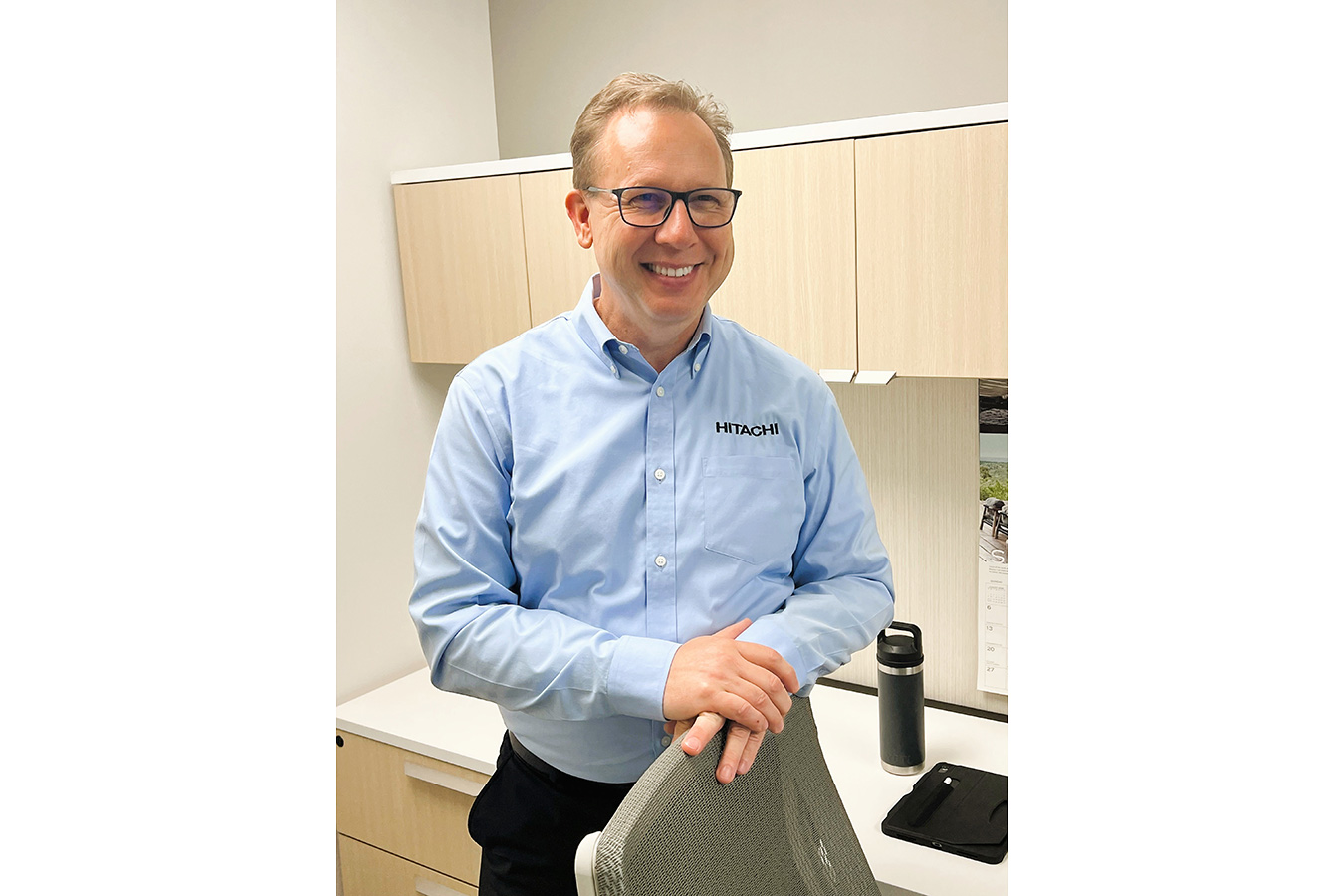
 Tom Poczekay
The way we work has completely transformed in the last decade. The rise of digital technology, artificial intelligence, changing workforce demographics, and even global events like the pandemic have reshaped not only how we live, but how our work gets done. For those of us in engineering roles, responsible for product development and innovation, these changes have unique opportunities.
On one hand, institutional knowledge in engineering must be preserved. This information helps ensure quality, safety, and manufacturing integrity. At the same time, when you work on a team responsible for innovation – embracing new ideas, new technologies, and new ways of working is how you help ensure your organization stays competitive and continues meeting the evolving needs of customers.
I’ve been navigating this intersection of old and new as I lead engineering at air compressor manufacturer Hitachi Global Air Power. One thing I’ve learned is to get great products, you need great team members. You need a team that collaborates openly and shares ideas freely. Just as importantly, you need to provide tools that support a changing workplace while being mindful of employees’ comfort with and familiarity using those new tools.
My goal, through it all, is to build an adaptable team. One that respects the past, embraces the future, and is prepared – even excited – for whatever comes next.
Engineering has evolved from a largely specialized discipline into something far more connected, collaborative, and complex.
The problems we’re solving today often don’t fit neatly onto a sheet of paper. In the early days of my career, if you had a question, you could walk down the hall and find the person with the answer. Today, our challenges are increasingly systems-based. Gone are the days when one or two people held most of the information. Today, our products must be smarter, more efficient, more connected, and more sustainable, while still delivering the reliability and durability customers depend on. As a result, engineers need capabilities and resources previous generations often didn’t.
Today’s work also involves digital simulations, IoT data, regulatory requirements, manufacturing considerations, and field data. This richer decision-making environment creates significant opportunities, but it also introduces greater complexity and demands stronger collaboration across disciplines. Engineers must regularly work across multiple disciplines, partnering with software developers, controls engineers, manufacturing teams, suppliers, global partners, and product specialists, and others. Solving today’s problems has become a multi-functional team sport.
Perhaps most importantly, today’s engineering challenges are no longer purely technical. Now we must ask broader questions: What is the customer experience? How will this affect manufacturing? What are the long-term operational impacts?
Strong engineering teams cannot evaluate a component in isolation. They must understand how each decision affects the product, factory, customer, and business. All these considerations add complexity to an engineer’s already demanding task of developing the next generation of innovation.
Change is never easy. From an engineer’s perspective, if you’ve already solved a problem successfully, it’s natural to question the need for a different approach. Add artificial intelligence, advanced analytics, and digital tools to the equation – many of which weren’t part of the profession when experienced engineers began their careers – and skepticism is understandable.
My take is simple: we should never confuse wisdom with tradition.
The experience and judgment developed over decades remain incredibly valuable. But while engineering’s fundamental objective of solving problems hasn’t changed, the scale and complexity of those problems certainly have.
We must always uphold our standards for safety, quality, reliability, and customer trust. Those principles are non-negotiable. Beyond that, however, every process, assumption, and approach should be open to examination and improvement.
The challenge then becomes ensuring critical institutional knowledge isn’t lost as we evolve. To me, expertise isn’t truly expertise if only one person possesses it. That’s a risk.
For an engineering team to be successful, knowledge sharing must be intentional; it’s essential to building in long-term adaptability. Some of the most effective learning happens through everyday work.
One approach we’ve found especially valuable is pairing seasoned employees with team members earlier in their careers. Rather than relying solely on formal mentorship programs or matching exercises, we allow real work and real challenges to create meaningful connections.
On our team, we pair experienced engineers with newer colleagues during reviews and problem-solving sessions. We conduct design reviews that involve multiple levels of our organization, so we benefit from fresh perspectives while helping develop the next generation of technical leaders.
At its core, a great team is about building relationships – which, honestly, can make some people uncomfortable.
Recently someone asked me, “How do I approach someone I don’t know?”
It’s a fascinating question because many people have grown accustomed, in recent years, to interacting primarily through screens and digital tools. Earlier generations often learned by simply walking up to someone, introducing themselves, and starting a conversation.
In today’s workplace, people are still searching for those human connections. In fact, many of us don’t just appreciate face-to-face interactions, we genuinely crave them. Building relationships is one of the most powerful ways organizations develop adaptable people and adaptable teams.
One of the most influential people in my career probably never considered himself a mentor. What made him impactful wasn’t a formal “mentor” title, rather it was the time he took to explain to me why a decision was made.
And learning isn’t one directional. Younger engineers often bring a level of comfort with digital tools and AI that many experienced professionals did not have early in their careers. They approach challenges differently and bring new experiences and fresh perspectives.
I’m a big believer in reverse mentorships. Our team is stronger when knowledge flows in both directions. And no single generation has a monopoly on good ideas.
It’s also particularly valuable when employees connect with mentors outside their direct reporting structure. These relationships create space for questions and conversations people might hesitate to bring to their manager or direct team members.
With modern engineering requiring complex interactions, the adoption of new tools and mindsets, and a more systematic approach, a highly functional, cohesive team is not just an advantage, it’s essential.
You can recognize a high-performing engineering culture by how people respond when challenges arise. In healthy teams, people feel empowered to raise concerns early instead of waiting for problems to become crises. Ideas and assumptions are challenged openly and respectfully, regardless of title or tenure. And, when mistakes happen, the focus remains steadfast on learning and improvement rather than blame.
Ideally, there is also open communication across functions. Cross-functional collaboration does not happen by accident. We have to build it and maintain it. Creating that kind of environment requires trust and deep understanding. The more we understand and relate to one another, the more comfortable we become working together. That trust encourages even the most junior employees to speak up when they see an issue or identify an opportunity – and it requires senior engineers to be receptive to fresh perspectives. When people share ideas, challenge assumptions, and raise concerns early, you know you are working in a high-performing culture.
The future of engineering will require us to preserve the judgment built over decades while continuing to challenge how we work. We need to share knowledge, build relationships across teams, and use new tools where they make us better.
Technology will keep changing. Our responsibility is to make sure our people are prepared to change with it, without compromising safety, quality, reliability, or customer trust.
That is the opportunity in front of us: combine experienced judgment, fresh perspectives, and better tools to solve meaningful problems. I am excited to see what our team does with it.
Use the checkboxes to select the types of cookies you want to accept, then press the “Save Settings” button. View our Privacy Policy.